 Lake Kawaguchi Tours
International Driving Permit for Kawaguchiko Tours
Last reviewed September 2026
An international driving permit for Kawaguchiko tours matters for exactly two of the tours compared here compared here, the trike and the electric mini car; the other seven ask for nothing more than a passport. Japan recognises only permits issued under the 1949 Geneva Convention, shown together with the home licence. A 1968 Vienna Convention permit, the kind issued across much of Latin America and Asia, does not work here even though it looks similar on the page. Belgium, France, Germany, Monaco, Switzerland and Taiwan issue no Geneva permit at all, so their drivers carry an official Japanese translation instead. Compare all the self-drive Lake Kawaguchi tours and the seven that need no licence at all.
Quick answer Two tours need it, seven don't, and six countries can't get one at all
You need an international driving permit only for the trike and the electric mini car, and it must be the 1949 Geneva Convention booklet, never the 1968 Vienna version. Travellers from Belgium, France, Germany, Monaco, Switzerland or Taiwan cannot get a Geneva permit at all and instead carry an official Japanese translation of their licence, valid for one year from entry. The other seven tours here need nothing more than a passport.
Key takeaways
- Only the 1949 Geneva Convention permit works in Japan; a 1968 Vienna permit does not, no exceptions
- Six countries issue no Geneva permit: Belgium, France, Germany, Monaco, Switzerland and Taiwan, their drivers use a JAF translation instead
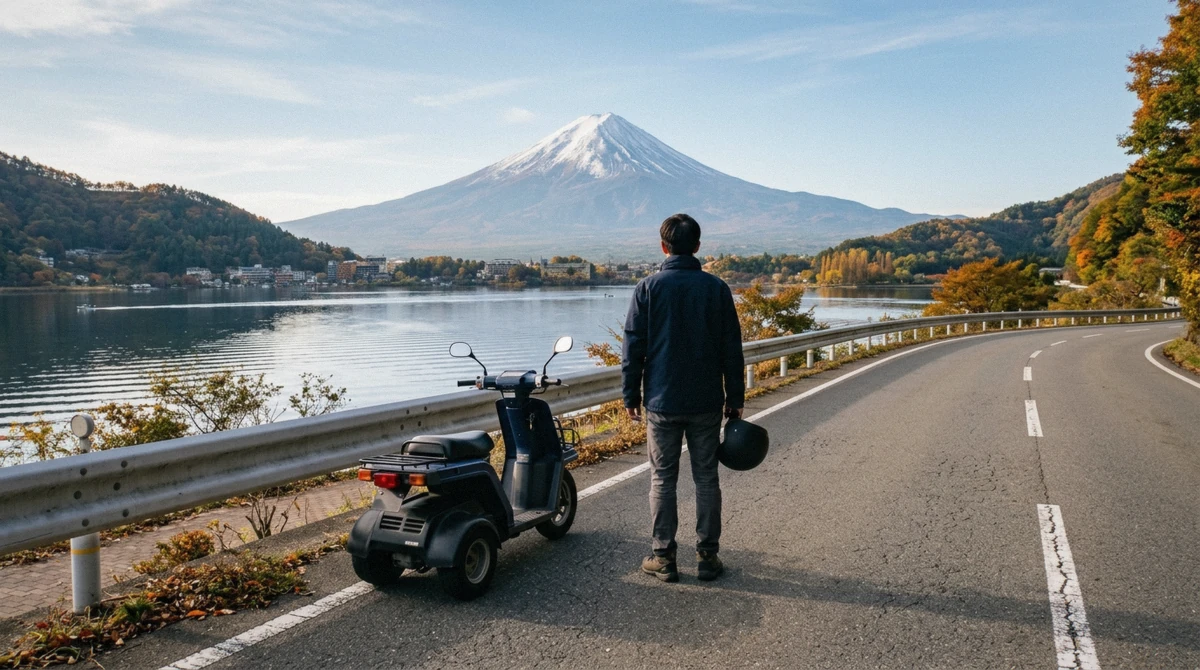
- Two of the listings here need a licence: the scenic trike ride and the electric mini car convoy
- An IDP is valid for driving in Japan for a maximum of one year from the date you entered the country
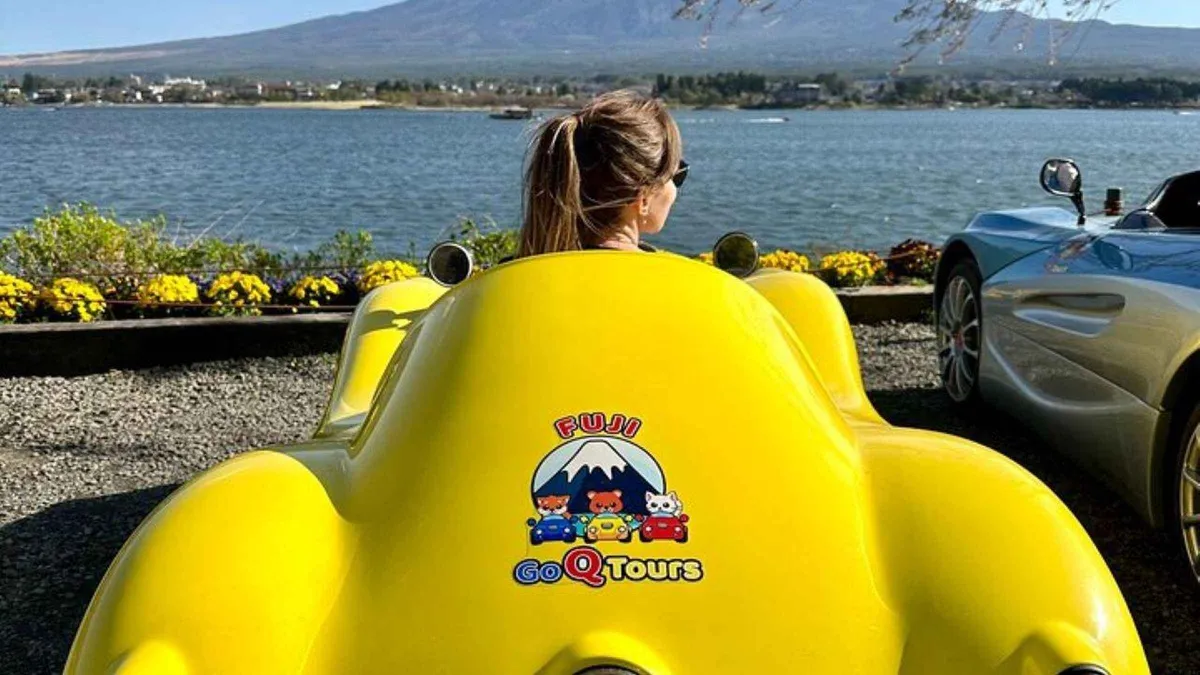
- Turning up without one is not just paperwork: Fuji Go Q Tours can require you to ride as a passenger instead, with no refund
- Weighing a self-drive car against a guided one anyway, see the break-even math for private versus shared tours
The Rule in One Paragraph
This is a rule set by Japanese law and enforced by the operators, not a technicality with a workaround.
Japan recognises only International Driving Permits issued under the 1949 Geneva Convention, and only when shown alongside the home licence they were issued against. This is stated plainly by the Tokyo Metropolitan Police in its own English-language notice on the subject. A permit issued under the 1968 Vienna Convention, the newer and more widely adopted standard elsewhere in the world, is not valid in Japan, even when the issuing country has also signed the Geneva agreement and even though the two documents look almost identical.
There is no legal route around this for a Vienna-only country. The one legitimate alternative is the official Japanese translation of a home licence, arranged through JAF (the Japan Automobile Federation) or the relevant embassy, and it exists specifically for the handful of countries that do not issue Geneva permits at all, covered below. Anyone hoping to talk their way past a guide with a Vienna permit or no permit is not going to drive that day.
Which Permit Japan Accepts
The country you hold a licence from decides which of two documents you need, and where to get it before you fly.
The two self-drive tours here are the scenic trike ride at $176 per trike and the electric mini car convoy at $272 per person; both check the driver's document before departure and neither accepts a card-format IDP.
| Where You're From | What You Need | Where to Get It |
|---|---|---|
| Most Geneva Convention countries (UK, Australia, Canada, most of the EU and beyond) | 1949 Geneva IDP booklet plus your home licence | Your national motoring authority, before departure |
| United States | 1949 Geneva IDP from AAA or AATA, plus your home licence | AAA or AATA in person or by mail, before the trip |
| Belgium, France, Germany, Monaco, Switzerland, Taiwan | No Geneva permit exists; an official Japanese translation of your licence | JAF (Japan Automobile Federation) or your embassy; valid one year from entry |
| Already in Japan without a permit arranged | The same JAF translation route, where it applies; otherwise the trike and mini car are not an option | A JAF office |
The Six Countries That Cannot Get One
Belgium, France, Germany, Monaco, Switzerland and Taiwan are the honest exception to the rule above.
None of these six issue a Geneva Convention permit domestically, so there is nothing for a driver from one of them to apply for at home. The recognised path instead is an official Japanese translation of the home licence, produced by JAF or by the traveller's embassy in Japan, and it is valid for driving in Japan for one year from the date of entry, the same ceiling that applies to a genuine IDP.
This is not a lesser document or a workaround; it is the specific mechanism Japan built for drivers from these six countries, and operators here treat it as equivalent to a Geneva permit for booking purposes. It simply has to be arranged, usually through JAF, rather than picked up from a motoring club before the flight.
Which Tours Here Need It, and Which Do Not
Seven of the tours compared here put a local guide behind the wheel; only two hand you the controls.
On the trike, children may ride pillion behind the driver if they fit securely, and no licence of any kind is asked of them; sandals are the one thing not allowed on either self-drive tour, for the same reason a licence is: an open vehicle and a shared road.
| Tour | Driver Needs | Passengers Need |
|---|---|---|
| Half-day private | No licence, the guide drives | Nothing |
| Full-day private | No licence, the guide drives | Nothing |
| Johnny's six-hour private | No licence, the guide drives | Nothing |
| Hidden-side drive | No licence, the guide drives | Nothing |
| Scenic trike ride | 1949 Geneva IDP booklet plus home licence | Nothing; ride as a passenger with the rider |
| Sunrise kayak | No licence | Nothing |
| Electric mini car convoy | Booklet-format 1949 Geneva IDP plus home licence | Nothing; non-drivers ride in the guide's car |
| Tokyo coach | No licence | Nothing |
| Tokyo minibus | No licence | Nothing |
Who Cannot Join Each Tour
Beyond the permit, every listing here enforces its own age, weight and health restrictions, pulled straight from the operators' own terms.
| Restriction | Rule on These Tours | Why It Exists | Ask Before Booking If... |
|---|---|---|---|
| Minimum age | Under 3 excluded from the sunrise kayak | Paddling and cold-water safety for small children | Your child is close to 3 |
| Maximum age | Over 80 excluded from the sunrise kayak | Cold-water immersion and paddling exertion | You or a companion is near 80 |
| Weight, individual | Over 100 kg excluded from the kayak; over 110 kg from the hidden-side drive | Vessel and seating safety limits | You are close to either figure |
| Height | Over 200 cm excluded from the hidden-side drive | Vehicle seating clearance | Anyone in your party is unusually tall |
| Mobility, wheelchair use | Not suitable on the hidden-side drive or the Tokyo coach | Vehicles have no wheelchair access | You or a companion uses a wheelchair or mobility scooter |
| Pregnancy | Excluded from the trike, the Tokyo coach and the Tokyo minibus | Vibration, seating and emergency-exit safety | You are pregnant, at any stage |
| Back problems | Excluded from the Tokyo minibus | Long seated hours in a shared vehicle | You have a chronic back condition or a history of back problems |
| Motion sickness or a cold | Discouraged from the hidden-side drive and the sunrise kayak | Winding mountain roads and cold-water exposure | You are currently unwell |
| Diet, on the optional lunch | Affects only the hidden-side drive's add-on lunch | The set menu has no standard substitution | You are vegan, vegetarian or gluten intolerant |
| Children under 5 | Need a car seat on the full-day private tour | Japanese child car-seat law | You are travelling with a child under 5 |
What to Do About Your Own Licence
If you hold a licence from the United States, Britain, Australia, Canada, Ireland or New Zealand
get the 1949 Geneva permit at home before you fly. It cannot be issued inside Japan.
If you hold a Belgian, French, German, Monegasque, Swiss or Taiwanese licence
order the official Japanese translation instead; the Geneva permit does not exist for you and the translation is what the operators accept.
If your permit is a card rather than a booklet
assume the mini car will refuse it and take the trike, which asks only for the Geneva permit and the home licence.
If you have been in Japan for more than a year
the permit has expired for driving purposes regardless of the date printed on it, and neither self-drive tour can take you.
If nobody in your group can drive
book anything else on this site's tour list; seven of the nine need no licence, and passengers on the trike need nothing at all.
What Happens If You Turn Up Without It
The operators check on the day, and the consequence is a lost drive, not a lost trip.
Fuji Go Q Tours requires the booklet format specifically, refuses card-format permits outright, and checks passport, licence and permit together before departure. If the documents do not hold up, the guide can require that person to ride as a passenger for the group's safety, with no refund for the difference, and cars are assigned on the day on a first-come basis rather than reserved in advance.
The Rental Trike BOSS enforces the same Geneva-permit-plus-home-licence rule for whoever will ride as the driver, with no Japanese licence accepted as a substitute. Neither operator is being difficult here: both are following the same national rule described above, and neither can legally let an unlicensed or improperly licensed driver take the road.
The Tours That Ask Nothing of You
Seven of the listings compared here here need no licence, no permit and no translation of any kind.
If arranging a permit or a JAF translation is not something you want to deal with before the trip, the guided options remove the question entirely. The full-day private tour covers all five lakes with a local driver-guide for eight to nine hours, and the Tokyo minibus covers Lake Yamanaka, Chureito Pagoda, Oshino Hakkai and Oishi Park in a single day from Tokyo Station or Shinjuku, both with nothing asked of the traveller beyond a passport for identification.
Seven of the listings on the Lake Kawaguchi tours page ask for no licence at all.
Questions About the Permit Rule
How do I get an international driving permit for Japan?
In most countries, through your national motoring authority before you fly; in the United States, through AAA or AATA. Apply for the 1949 Geneva Convention document specifically and bring your home licence with you, since the permit alone is not valid on its own.
Is the IDP free for AAA members?
No, AAA and AATA both charge a processing fee for the permit itself, membership does not waive it. Check the current fee on their sites before you apply, since it can change.
How long does it take to get an IDP for Japan?
Applying in person at a AAA or AATA office is generally the faster route; applying by mail takes longer. Either way, arrange it well before your trip rather than in the final days beforehand.
Do I really need an International Driving Permit in Japan?
Only if you plan to drive yourself, which on this site means only the scenic trike ride or the electric mini car convoy. Every other tour puts a local guide behind the wheel and needs nothing from you.
What if my country doesn't issue a Geneva permit?
Belgium, France, Germany, Monaco, Switzerland and Taiwan fall into this group. The recognised alternative is an official Japanese translation of your home licence from JAF or your embassy, valid for one year from entry.
Can I still ride the trike or mini car without an IDP?
Not as the driver. On the mini car, a guide can let you ride along in their own vehicle instead with no refund for the difference; on the trike, the booking is built around whoever holds the valid permit doing the driving.
Does the time of day affect a self-drive tour the same way it affects viewing Fuji?
Yes, and it is worth knowing before you book. The trike's fixed 10:00 and 15:00 departures both start after the clearest hours to see Mount Fuji from the lake, which run from 6 to 8 in the morning, so a self-drive tour trades the best light for a later, more flexible start.
Two tours out of nine here ask for a licence at all, and Japan's rule about which permit qualifies is set by national law and enforced consistently, with no exception worth chasing. Confirm which document your country issues before you book either self-drive option, and if the answer is none, the guided majority of these tours were built for exactly that.